🚀 llms.txt are live on SN33
The llms.txt repository is now live. 🔗 http://github.com/afterpartyai/llms_txt_store
SN33 has processed the first batch with over 1,000 websites crawled, cleaned, and converted into structured llms.txt files by the subnet.
Semantic summaries ready for any LLM agent, MCP server, or AI app to consume instantly. No scraping. No parsing raw HTML. Just clean, machine-readable intelligence.
New batches will be pushed as the subnet keeps processing. The repo grows every week.
What's in the dataset:
→ Structured semantic summaries per domain
→ Named entities: people, orgs, products, technologies, concepts
→ Topic classification and key themes
→ Deterministic O(1) lookup by domain with no index file needed
→ Git-friendly structure that scales to millions of domains
This initial release covers ~1,000 domains as a pilot, but the pipeline scales to millions.
📍 Roadmap: 10K → 100K → 1M domains → continuous updates from new Common Crawl releases and soon from requests.
🌍 And the frontend is coming.
Any domain. You request it, the subnet processes it, you get an llms.txt back. We're putting the finishing touches on the public UI and it drops soon.
SN33 is becoming infrastructure. The web, made readable for machines and open to anyone, powered by decentralized infra.
Star the repo. Share it. And stay close. The next drop is right around the corner.
LinkedIn
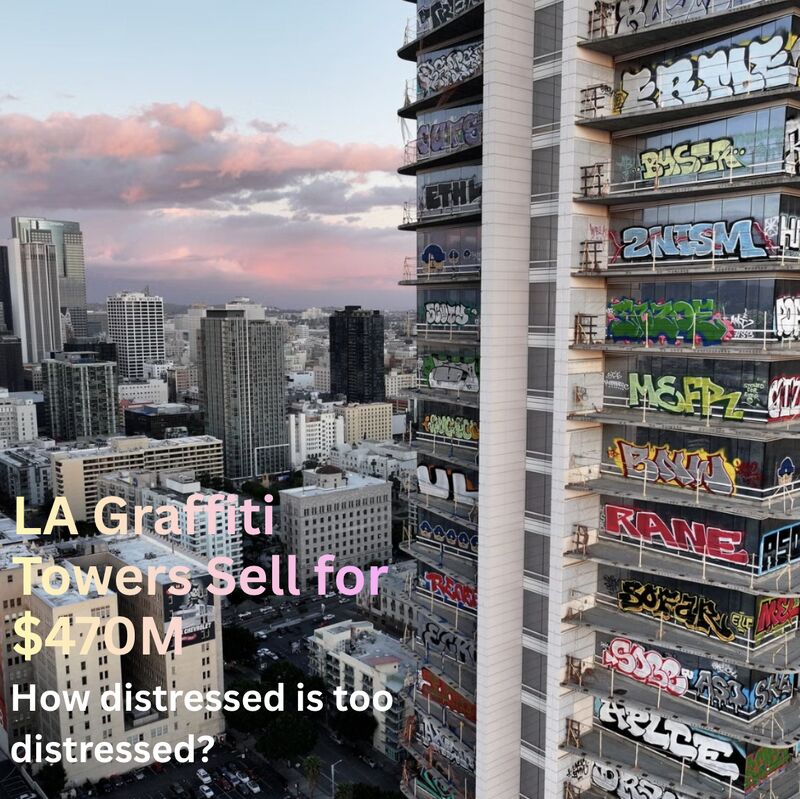
Three unfinished skyscrapers have sat empty in Downtown Los Angeles for seven straight years, but this week they finally sold... for $470 million.
As it turns out, their official name is Oceanwide Plaza. But LA locals have been calling them the Graffiti Towers for about as long as I can remember.
It all started as a $1 billion dream: three towers across from the Crypto.com Arena, which adds up to more than 500 condos, 180 hotel rooms, and ~170,000 square feet of retail.
Then in 2019 the Beijing-based developer ran out of cash and left.
Without a buyer, the towers became a fenced-off concrete shell in one of the most visible spots in the city.
And in 2024, the fence finally failed.
Vandals covered 27+ floors in graffiti that could be seen from the freeway and every concert or game across the street. Base jumpers showed up, and the internet filled up with clips about it.
It became America’s most famous unfinished building.
But after two years in bankruptcy court, a joint venture between The KPC Group and Lendlease (the original contractor) won approval to buy it for $470 million, plus a promise to spend another $800 million on it.
A total bet of $1.2 billion on a structure most people only recognize from viral drone shots of spray paint, and the graffiti removal has already started.
Now don't get me wrong, distressed assets can be a gold mine. This one just makes you wonder where the line actually is.
Seven years empty, the developer being gone, two dozen floors turned into a canvas, and squatters probably living in it apparently still wasn’t too distressed, as far as LA Commercial Real Estate goes.
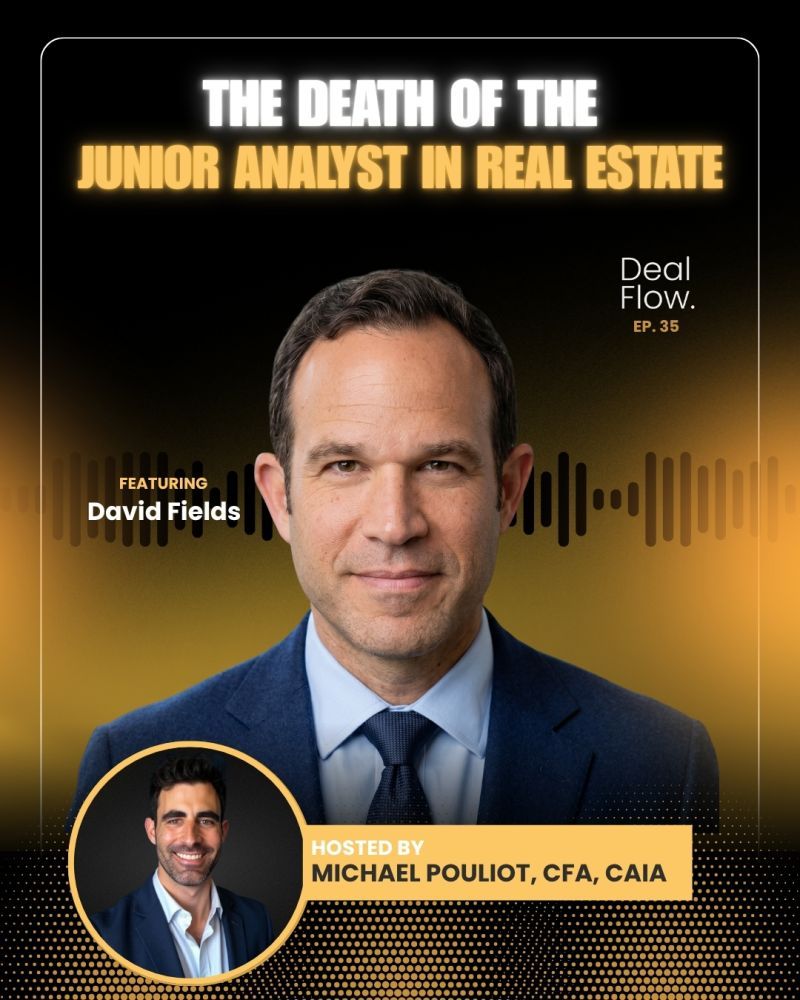
Two Disney CEOs bought sports teams. Michael Eisner paid $7.4 million. Bob Iger just agreed to pay $12.5 billion. I ran acquisitions on the first one.
In 2017, while I was running investments for Eisner’s family office, Tornante, we bought Portsmouth FC for £5.67 million, about $7.4 million at the time. A nearly bankrupt club, rescued by its own supporters’ trust, freshly promoted from League Two to League One, the third tier of English football. Tornante has since put roughly tens of millions more into it, all equity, no debt against the club. It took seven years of actual promotions to reach the Championship.
This month, Iger and Josh Kushner agreed to buy Mark Walter’s controlling stake in the Lakers at a $12.5 billion valuation, pending league approval. Walter closed his own purchase in October at $10 billion. Jerry Buss bought the team in 1979 for about $16 million, the Lakers’ share of a $67.5 million package that also included the Kings, the Forum, and a 13,000-acre ranch.
Different sport, different country, different era of ownership. Granted. Here is what still bothers me.
$2.5 billion of appreciation in about a year, without much changing on the court.
I have spent my career in corporate and real estate M&A, and when something moves that fast you ask what is actually underneath it. National media money did reprice higher starting in 2025 season (so older news). The bigger story is local and regional TV money is collapsing (the rich Mark Walter's backed Dodgers TV deal is now under scrutiny as well). Most teams are breakeven at best. And the multiple here (20X) is the kind usually reserved for the fastest going AI companies.
Which points at something simpler than a bubble. These are two different asset classes wearing the same jersey. Portsmouth is an operating business you have to build. The Lakers is a trophy asset priced like a Picasso painting, where the value is whatever the next buyer will pay.
Only one of those can be truly be underwritten.
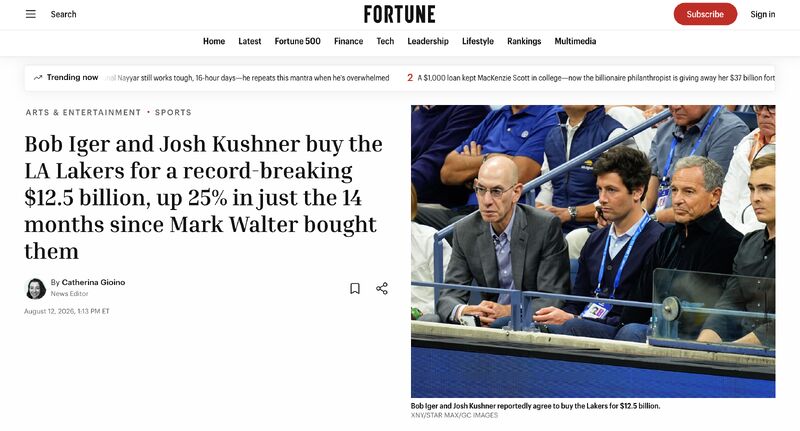
Every point here is foundational for anyone who wants to do well in commercial real estate, but rule #10 is the one everyone underrates.
Maybe because it's actually two rules in disguise.
Sitting on your hands when nothing pencils is huge. You can't panic buy, force bad deals, or lower your standards just to deploy capital.
But the inverse matters just as much.
When the market shifts and a wave of deals actually start to pencil, you need to be able to pull the trigger fast. Spend too much time bogged down on deals that don't work, and you'll miss the ones that do.
The best deals are inherently competitive.
If an asset is distressed or the market prices it attractively, assume multiple acquisition teams are circling it at the same tome as you.
I saw this firsthand when the 2008 bubble popped, when I was leading real estate acquisitions at Regent Properties.
The firms that came out on top weren't just patient when the market was overpriced, they were decisive the second the math made sense.
Back then, moving that fast required an army of analysts & associates, bro culture, and enough caffeine for everyone to put in 14 hour days. Now you just need your team to use AI well.
That's easier said than done.
You signed off on Claude Enterprise seats for your whole acquisitions team. Your top associate is handing in their two weeks notice anyway.
I wouldn't blame you for being a little confused.
You authorized the budget, gave them the frontier model, and told them to be 10x more productive. Then you probably patted yourself on the back for being a tech-forward Managing Director.
But the reality check is that you didn't actually give them an automated workflow.
You just gave them a second job.
Instead of manually spreading a 40-page rent roll in Excel, your associate is now spending an hour fighting with an LLM to get the formatting right.
They upload the PDF. The AI hallucinates a termination clause. They spend an hour line-by-line auditing the output because they are terrified of looking stupid in front of the Investment Committee.
Then they still have to copy and paste that data into your firm's Excel template.
They didn't join your firm to moonlight as a software engineer, they joined to underwrite commercial real estate and build relationships.
But every time a new deal comes in, your analysts and associates are starting from scratch.
They are stuck with a chatbot that has no memory of your firm's investment thesis, no context on the deals you passed on, and no understanding of how your IC likes to see the numbers presented.
Sure, you could theoretically build all that by wiring up databases and API pipelines. But let's be honest... you're in commercial real estate, not SaaS.
And realistically, that takes more effort than it’s worth for a small to mid-sized firm.
So you didn't turn your associate into a 10x investor, you turned them into a frustrated prompt engineer.
Your star associate isn't leaving because they don't believe in AI.
They're leaving for a competing shop that actually understands the difference between a productivity tool and a system fit for CRE underwriting.

I went from M&A at Disney and Pixar to real estate private equity, and the thing that wasted my time the most was the same in both.
The first-pass work.
Pulling an OM apart, building the model, reconciling the numbers, all just to learn whether a deal was even worth a second look.
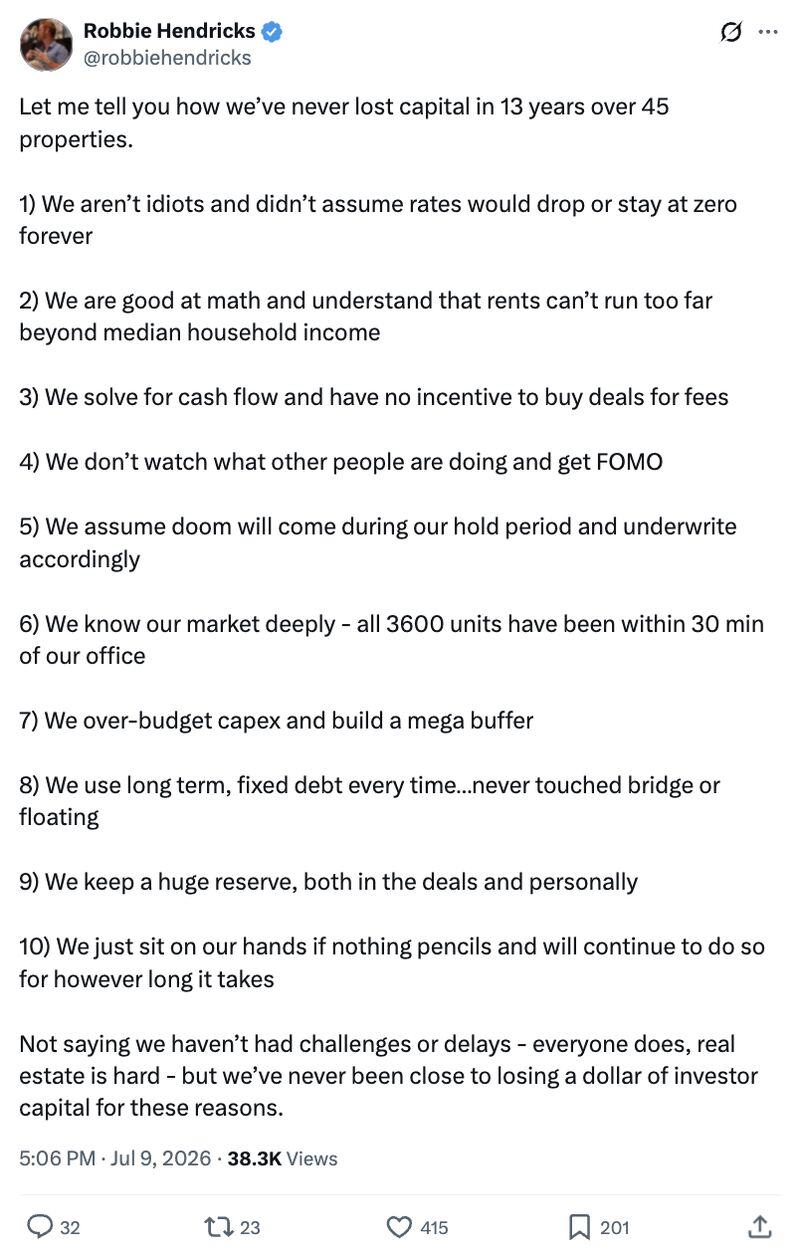
I just sat down with the DealFlow Podcast to talk about why AI changes that, and why I don't buy the idea that it kills the junior analyst role.
What AI removes is the manual grind, and what it leaves behind is the judgment. The analyst who used to spend five hours rebuilding a model now spends that time pressure-testing assumptions and catching what a model can't.
That's a much bigger job.
We also got into the part nobody likes to say out loud: the danger is not AI, it's trusting an output you can't trace. Which is why verifiability and citations matter so much.
Every number needs to point back to a source.
We covered going from an OM to an investment-ready model in minutes, verifying rent comps live, and why every deal you look at becomes an asset for your firm in the form of data.
Give it a listen here: https://lnkd.in/gQ6N98jp
#CRE #AI #PrivateEquity
We put up a job posting for an AI-native analyst last month, and it got 500+ applications.
We just hired someone for the role.
But the process of finding them made the definition of the role clearer to me than any job description ever could.
The traditional junior analyst role is fading, but every investment team is still looking for the same exact profile: graduated from a top school, two years of banking, and the ability to grind 80-hour weeks formatting comps.
They're hiring for a decade that has already passed.
The analyst who will 10x a deal team today doesn't just build a DCF in their sleep. They spend their time building AI workflows that do in five minutes what used to take an entire weekend.
They don't just know how to build a financial model, they know how to teach AI to do it consistently.
When we were sifting through those 500 applications, two types of candidates kept emerging.
The first understood real estate. High-level finance, deal structuring, how capital actually moves. But they treated AI like a chatbot... think a faster Google search.
The second lived inside agent development, prompt chains, and workflow automation. But hand them an offering memo and they'd glaze over.
The person we hired was in neither group, because they were both.
Because a day in the life of this role isn't sitting behind a screen running models. It's sitting in client meetings, mapping existing workflows, identifying where AI can compress a two-week process into two days, and removing the inefficiencies that kill deals before they ever get to the finish line.
They aren't a software engineer who doesn't understand real estate, and they aren't a finance professional who uses AI as a parlor trick.
They bridge the gap.
The best commercial real estate teams of the next decade won't be built on headcount, they'll be built on leverage.
And the AI-native analyst is one of the building blocks to create that leverage.

When I was an analyst at Disney, we bought Pixar for $7.4 billion.
They'd just hit seven consecutive grand slams, with franchises like Toy Story and Cars being billion-dollar merchandising goldmines.
But a price tag that high meant we couldn't just coast on modelling their old cash flows.
We were betting everything on their next wave of IP.
Then we got deep into diligence. We were sitting in a conference room when their team slid a release schedule across the table, and we were caught off guard.
The very first movie Pixar had scheduled to release after our massive acquisition?
A film about a rat who wanted to be a French chef.
On paper, that was terrifying. How do you sell plush toys of a rodent in a kitchen?
We honestly thought we'd forked over billions to inherit a high-profile flop right off the bat.
But Ratatouille didn't just do okay, it became a genuine classic. Bizarre premise, flawless execution, undeniable value. And I see this exact dynamic play out today in commercial real estate, especially with distressed assets.
The best deals rarely look pristine on the cover of an offering memo.
On the face of it, they look scary. Think a blighted property, a fractured rent roll, or a neighborhood that makes traditional lenders nervous.
But if you only pursue the deals that look safe and obvious on day one, you're competing with everyone else.
True alpha lives in the assets that scare people off.
The problem is that most deal teams never get that far. Their analysts are too bogged down in formatting and rote work to actually stress-test the risks, to dig past the bad first impression and find where the real value lives.
That's the gap we built AcquiOS to close. A system that cuts out the busywork, so your team can spend their time on the deals that actually require judgment, which happen to be the ones where the real money is made.
Don't let a rough first impression kill a deal before you actually finish doing the math.
Because sometimes, the rat in the kitchen is the best asset in your portfolio.

Microsoft just looked at the bill for Claude Code and said no.
This week they started canceling internal licenses.
The same Microsoft that put $13B into OpenAI. The same Microsoft whose Azure runs most of Anthropic's compute. A company with effectively infinite cloud resources just decided a competitor's coding tool wasn't worth paying for.
The token meter ran too hot.
They're not alone:
→ Uber's CTO sent a memo this week. Entire 2026 AI budget, burned in four months.
→ US AI token prices: up 20% to 37%.
→ GitHub (owned by Microsoft) is dropping flat-rate plans. Going usage-based across the board.
The AI subsidy era is ending in real time.
My Take:
Token-based pricing is forcing every enterprise to confront what running these models at scale actually costs. The number is far higher than the flat-rate experiments suggested.
Anthropic, OpenAI, and Google all raised effective prices in the last six months. Workflows built on the assumption that AI gets cheaper are watching annual budgets evaporate quarterly.
For every real estate firm currently weighing Build vs Buy on AI, this is the memo to forward to your CFO.
Building your own stack on the Claude or OpenAI API seemed like the strategic move. Own the IP. Control the workflow. Lower enterprise pricing.
That last one is gone. Enterprise Claude is now fully token-based. Every analyst query, every deal re-run, every IC prep cycle is metered.
But cost was always the easier argument. The harder one: real estate firms aren't software companies. You don't have a team of engineers. You have analysts and acquisitions principals.
The first 80% of an AI build looks easy. Anyone can wire an OM into Claude and get something that resembles underwriting.
The last 20% is where every internal project dies. Consistency of outputs across deals. Repeatability across analysts. Reliability when the model has to do the same job the same way on the 400th OM as it did on the 4th.
That 20% is the actual product. And it takes a software company to build it.
The cost arbitrage was the only thing making the engineering bet defensible. That's gone too.
This is why we built AcquiOS to flex by deals uploaded. You budget AI the same way you budget your deal pipeline because that's exactly what it scales with.
Plan for where you are. Scale to where you're going.
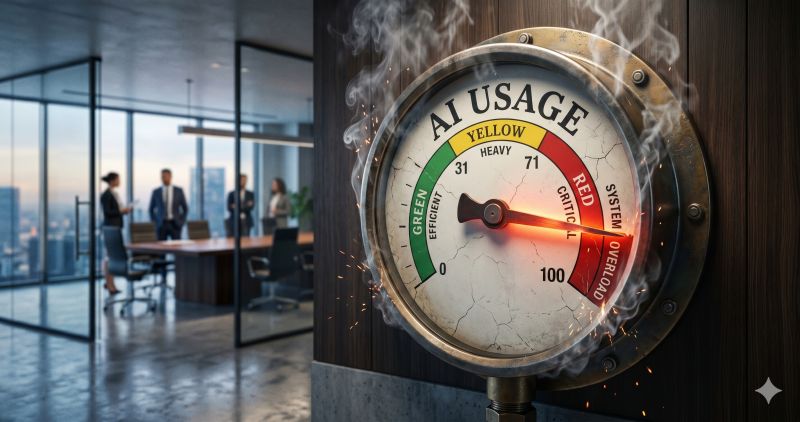
You just handed your top associate a VP title and a massive bonus.
You think you secured your best hire for the next three years.
Next Monday, they're handing in their resignation.
You're going to assume a competitor simply outbid you. You're wrong.
They're leaving because the title changed, but the day-to-day reality didn't.
Sure, they have "Vice President" on their business card now.
But they're still spending too much of their week on manual lease abstraction.
They're still losing hours copying data into ARGUS.
They're still acting as a human router for broker emails.
You gave them a promotion on paper. But in practice, you just made them the manager of a more spreadsheets.
They aren't leaving for a bigger check. they're leaving for a tech-forward family office.
These teams are typically small, high-leverage groups managing hundreds of millions in assets. They use tools like AcquiOS.
At a firm like that, a VP actually gets to pull the trigger on deals, direct strategy, and build a portfolio. They aren't just crunching numbers and formatting decks for an investment committee.
Firms love to hand out new titles to solve retention problems.
But if your team is drowning in manual data entry, a title bump is just a fake promotion.
Your top performers didn't get into real estate to be highly paid human APIs.
They got into it to be investors.

Is Commercial Real Estate actually using AI to make big decisions, or are we treating it like a glorified intern?
AI was the topic of 5 back to back panels this year and speaking with dozens of execs at IMN CFO/COO West, here are my 3 takeaways:
1. AI isn't just a toy for junior analysts anymore.
About 75% of the VP-level+ CRE professionals I spoke with use AI daily. But almost all of them are using Claude for ad-hoc tasks here or there, not baking it into core workflows yet.
2. The human element is still non-negotiable in real estate.
Between keynotes on automation and data engines, it’s clear everyone wants AI for the prep work: market research, lease abstraction, marketing, etc.
But when it comes to deploying capital? Human in the loop review is key.
3. There's a massive trust bottleneck with LLMs.
In discussions around risk management, transparency is the ultimate roadblock. Investment committees will never adopt AI for underwriting if it's a black box. They demand auditable math and citations to the docs just like the ones AcquiOS provides.
Overall, an incredible couple of days connecting with the community and discussing the future of CRE.
It was an absolute pleasure meeting John Yamane, Jonathan Knight, and Allen Wong. Also great catching up with Ungar Kung.
Until next year, Newport Beach! ✌️
Same conversation three times this past week with CRE acquisitions analysts at different firms:
"DealPath is great at tracking my pipeline. RedIQ is great at pulling numbers off a T-12. But when it's 9pm and I have to decide if this deal fits our buy box, I'm still in Excel."
The tools track. They don't analyze.
Every firm has an investment thesis. A return profile, a market footprint, rent-growth assumptions the IC has already signed off on. None of the category leaders know any of that and they can't, because they're pipeline software, not investment software.
So the first real acquisitions question, is this deal in our box?, still lands on a human with a spreadsheet.
That's the gap AcquiOS was built for:
→ OM to memo-ready model in minutes
→ Every broker assumption pressure-tested against market comps, rent, cap rate, vacancy, expenses, before the model runs
→ Every deal scored against your specific buy box (AcquiScore 0–100, PROCEED, CAUTION, PASS), not a generic template
→ Pipeline tracking as the byproduct, not the product
This isn't a Dealpath replacement. Dealpath is a pipeline. AcquiOS is the question above the pipeline: does this deal even belong in it?
If your analysts are burning 4 hours on a deal only to pass, you already know the problem. Would love to show you the other side.
Commercial real estate is one of the few industries AI won't commoditize. Not because the work is too complex. It's because sellers don't just pick offers.
They pick buyers.
You can't buy shares in a building. You have to buy the whole asset, and someone has to actually choose to sell it to you. A seller who's held a property for twenty years isn't just looking for the highest number. They're looking for certainty.
Certainty that you'll close, that you won't retrade at the eleventh hour, that your process will run smoothly without any hiccups. Brokers are making that same call every time they decide who to send a deal to: is this the buyer I trust to get it done?
That trust gets built one handshake at a time. It's why this will always be a relationship business.
But that isn't an excuse to ignore the technology.
Your relationships are exactly what create your information advantages in the first place. The problem is those advantages tend to stay stuck in your head, in an associate's inbox, buried somewhere in an email thread.
AI doesn't replace the handshake. It becomes your 2nd brain. Gathering intelligence from those handshakes and putting it in the hands of everyone on your team, in real-time.
Relationships get you the first look. The ability to organize, scale, and act on what you learn is what actually closes the deal.
We've stopped doing traditional software demos at AcquiOS. Now, we do "reverse demos".
Everyone in commercial real estate is evaluating AI right now. But the way we used to buy software was fundamentally broken.
A sales rep shares their screen, clicks through a perfectly rehearsed workflow, and 30 minutes later, your acquisitions team is left wondering:
"Will this actually handle a messy OM or a scanned T12?"
The rest of the tech world figured this out years ago. Proptech is still catching up.
We're flipping the script by borrowing a format from Clay: the "reverse demo."
Instead of a generic walkthrough, we changed the rules:
→ You share your screen
→ You upload your own offering memorandum
→ You drive the platform
There are no perfectly curated sandboxes. Just total transparency.
When a firm brings their own deal data, they see exactly how the system handles the real world.
No guessing, just proof.
It's infinitely better than a standard free trial, because you aren't left alone to figure it out. We'll be sitting right next to you, guiding you through underwriting your own deal, in real time.
No one should have to take a leap of faith on AI.
The companies that win the next decade of real estate tech won't be the ones with the slickest slide decks. They'll be the ones brave enough to hand you the keys from minute one.
Ready to take a reverse demo of AcquiOS? Send me a DM.
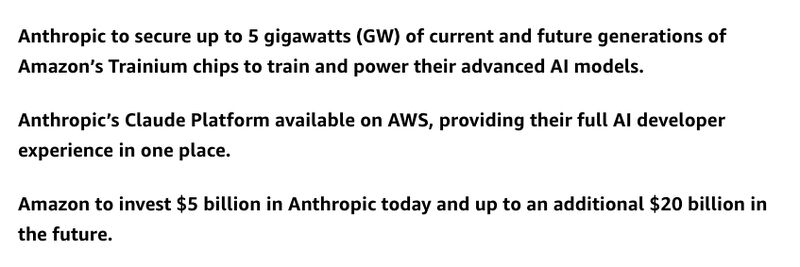
Pretty big news today. Appetite for AI compute is endless. Having built AcquiOS on Claude and AWS it is no surprise.
Anthropic just committed to spend over $100 billion on AWS over the next 10 years. 5 gigawatts of compute. Trainium chips through the next several generations.
Why does this matter for us?
AcquiOS is built on Claude. It's the model we've consistently found most effective for financial analysis work like underwriting, rent roll reconciliation, etc. We're in the Claude Partner Network and we've been working closely with their team as we build.
We also deploy AcquiOS for our enterprise customers inside their own private AWS environments. So when Anthropic goes deeper on AWS, it means better performance, lower costs, and more compute for the exact infrastructure our customers are already running on.
Excited about what's ahead.
Most CRE acquisition teams still spend 5–10 hours building a single IC model.
In 2026, that's no longer a competitive stance. It's a liability.
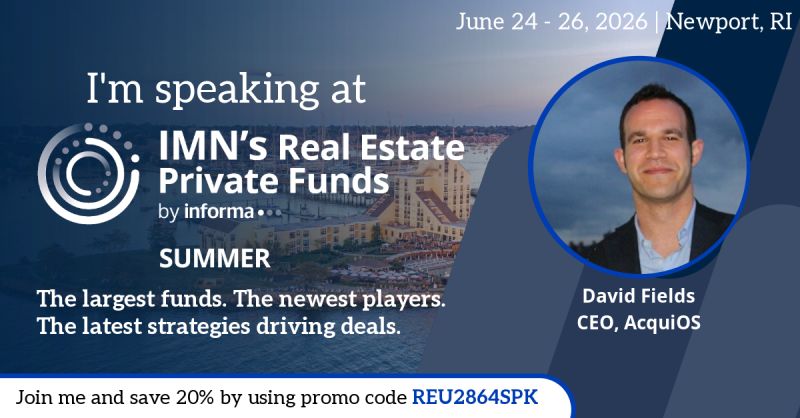
That's the conversation I'm looking forward to at IMN's Real Estate Private Funds Summer, June 24–26 in Newport, RI, where I'll be joining the AI panel alongside some terrific peers.
At AcquiOS, we're collapsing that 10-hour workflow into minutes: OM → fully-modeled deal in your template, with citations on every number and an AcquiScore that actually reflects your investment criteria.
Excited to swap perspectives on where private funds go from here.
Register with code REU2864SPK for 20% off.
Your top analyst just put in their two weeks notice.
But the biggest loss isn't the talent walking out the door. It's the multi-million dollar underwriting model they're leaving behind.
When they started, that spreadsheet was a clean, standardized baseline.
Then, the mutations began.
The team spent hours bolting on different pieces for a complex debt structure, a phased development timeline, and a highly specific Investment Committee request.
Before long, the model mutated into a fragile web of cross-sheet references.
The problem now is that your departing analyst is the only person on the team who actually knows how to get it to all calculate. If the hire meant to replace them changes one wrong cell, the entire thing falls apart.
All that undocumented expertise just walked into an elevator, leaving you to rely on a Frankenstein spreadsheet held together by three hidden cells nobody else understands.
The smartest teams are killing this cycle.
They aren't forcing their analysts to build and maintain fragile models.
They're using AI to ingest offering memorandums, extract the data, and instantly generate clean, fully functional financial models in their approved templates.
When your underwriting relies on manual formula adjustments, you aren't just frustrating your best talent. You're creating a massive operational liability.
Analysts want to evaluate real estate, not play mechanic to a dying Excel file.
If your entire pipeline depends on one associate's ability to keep a spreadsheet alive, you don't have an underwriting advantage. You have a single point of failure.

It's 2:00 AM, and your top analyst is still at the office. They're manually copying numbers from ARGUS into your master Excel model.
You probably think this shows dedication and grit. In reality, it's a massive, unhedged financial liability.
We treat late-night formatting sessions as a badge of honor in commercial real estate. We call it "paying your dues."
But relying on an exhausted human to flawlessly transfer data between ARGUS, Excel, and PowerPoint is NOT rigorous underwriting. It's a gamble.
One wrong keystroke in a pro forma can mis-price an asset by millions. A single broken formula, buried deep in a spreadsheet after midnight, can blow up an entire deal or cost your investors a fortune.
How much investor capital is currently riding on an associate's ability to stay awake? And how happy are you to make that gamble?

A month ago, maybe one in four people in commercial real estate had used Claude. Today, awareness is closer to 100%.
And it should be. Claude is an incredible tool for each individual on the team. But there's a massive difference between using AI as an individual productivity tool for one-off tasks and leveraging it to its full potential as an organization.
Right now, most teams are taking the first approach. The VP pushes for everyone to have a $20/month Enterprise subscription. Their analysts open a chat window, drop in a financial model, and use the AI to trace formulas or speed up a specific task.
But if you push that single thread too far, it breaks. If you upload 50 leases to create a rent roll, you want to utilize all relevant deal information on deals you've already looked at, you need an AI-native system powered by Claude.
The real shift for commercial real estate isn't just giving your analysts a faster calculator. It's building AI into your core processes as an organization. The firms building for the future today are starting to weave it into their firm's DNA.
The self-storage industry has a $50B+ fragmentation problem.
There are more individual-owned storage facilities in the US than Starbucks locations. Most have been held 15–25 years by the same family. No broker. No listing. No online presence.
That's the opportunity. But reaching them has always been the bottleneck.
We built AcquiOS Deal Sourcer to solve it:
→ Identify every self-storage facility in an MSA
→ Filter out the REITs (60–70% of what Google Maps returns)
→ Verify each property against public records
→ Pierce every LLC to find the individual behind the entity
→ Score on acquisition feasibility, not just location quality
→ Deliver verified owner phone numbers for direct outreach
400+ scored targets. 136 LLCs pierced to individuals. 275 verified phone numbers.
This is what the deal sourcing pipeline should look like in 2026.
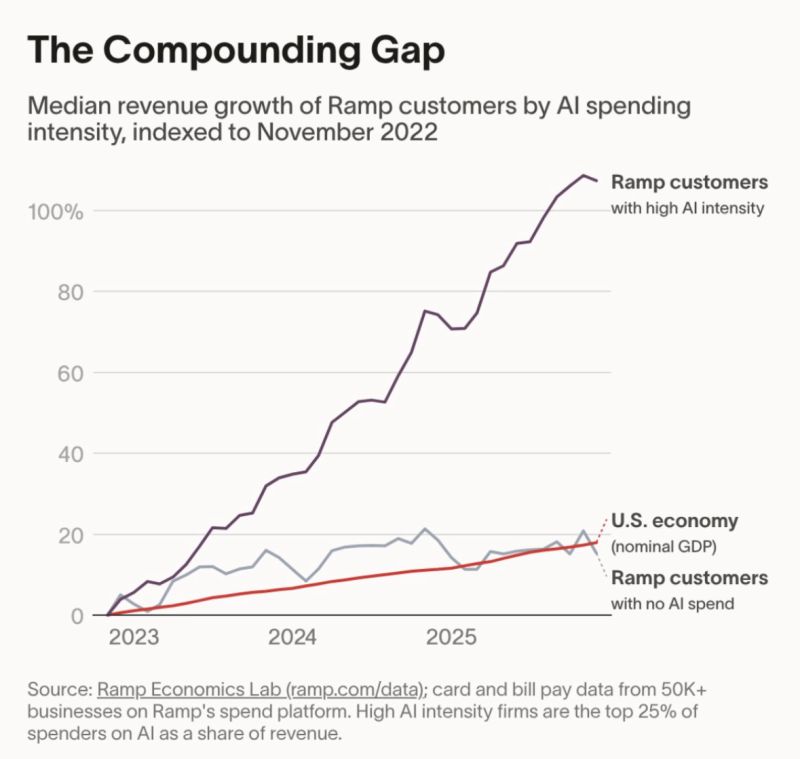
Ramp just dropped the most important chart in business right now. Companies spending heavily on AI are growing revenue 5x faster than those that aren't. And the gap is compounding.
This isn't a tech story. It's a capital allocation story.
In CRE, the parallel is brutal: Your acquisitions team reviews 20+ OMs a month. Each one takes 5–10 hours to model. By the time your analyst builds the DCF, the broker's best-and-final has come and gone.
The firms using AI to underwrite aren't just faster and seeing more deals. They are using AI to project manage the whole due diligence process: killing bad deals earlier (saving thousands in the process) and putting capital to work while everyone else is still in Excel.
And their data COMPOUNDS. We built AcquiOS to put acquisition teams on the right side of this curve, getting you from OM to financial model in minutes, in your template, with every assumption sourced and auditable.
The question isn't whether AI changes real estate. It's what color line on the graph you'll be.
Just wrapped IMN Multifamily in Miami. Heading to DC Finance Family Office Summit in NYC tomorrow. The data is telling the same story in every room: the buying window is opening and most people aren't paying attention.
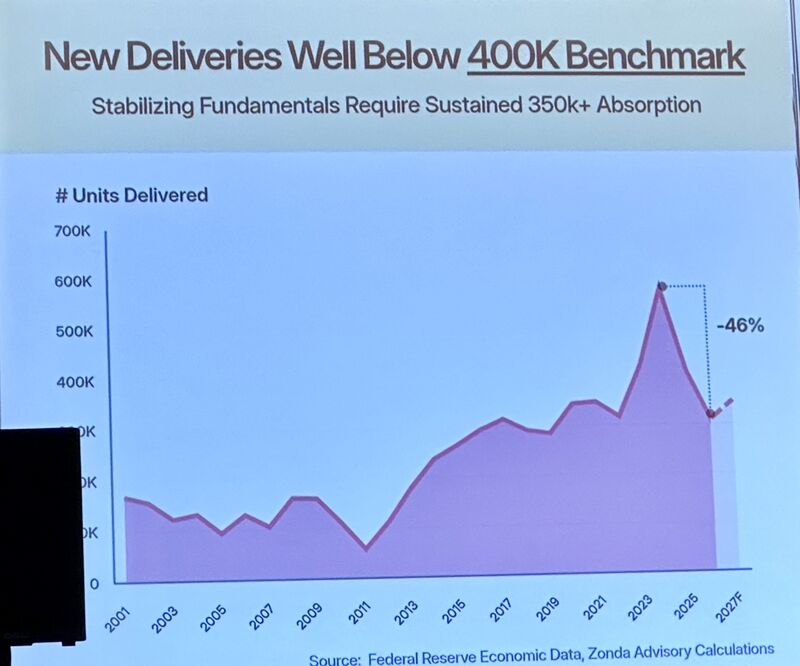
New multifamily deliveries have fallen 46% from peak and are now well below the 400K annual benchmark. Stabilization requires sustained 350K+ absorption and we're getting there fast.
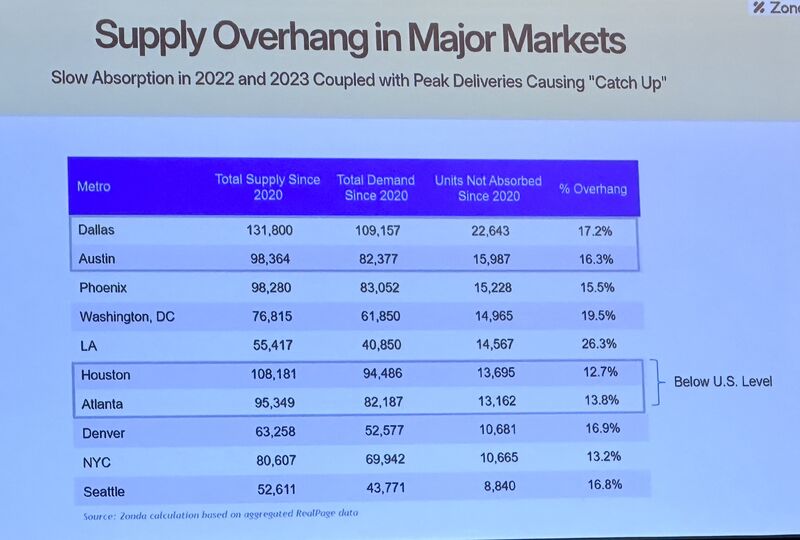
But the overhang is wildly uneven. LA is sitting at 26.3% supply overhang since 2020. DC at 19.5%. Meanwhile Houston (12.7%) and Atlanta (13.8%) are already below the national average.
The Sunbelt markets that looked overbuilt 18 months ago? They're now backed by permanent, high-wage employment anchors from Samsung's $44B fab in Austin, Fujifilm's $3.2B gigafactory in Raleigh and NeoCity semiconductors in Orlando. This isn't pandemic migration anymore. This is structural.
The supply side is correcting itself. The demand side never left. The capital markets just haven't caught up yet.
Featured On
Hear David on the Podcast Circuit
David Fields, CEO of AcquiOS, shares how AI is reshaping commercial real estate acquisitions.
Get Started
Ready to see AcquiOS in action?
Book a live demo or talk to our team about how AcquiOS fits your workflow.